Teenage Acne: Why It’s Hormonal (Not a Hygiene Problem) and What Actually Helps
If you’re a parent watching your teenager battle breakouts, you’ve probably heard “it’s just hormones, they’ll grow out of it” more than once. It’s true that hormones are the driver behind most teenage acne. But that doesn’t mean nothing can be done, and it definitely doesn’t mean the answer is a shelf full of high street acids and a viral TikTok routine.
What Causes Hormonal Acne in Teenagers?
During puberty, androgens (the hormones responsible for so much of puberty’s upheaval) surge in both boys and girls. Androgens stimulate the sebaceous glands, which enlarge and become significantly more active. More androgen activity means more sebum production. At the same time, skin cells are shedding faster than they should, a process known as hyperkeratosis. When excess oil meets excess dead skin cells inside the follicle, they form a plug, and that plug is the starting point for every type of acne lesion, from a simple blackhead to a deep, painful cyst.
This is also why teenage acne so often shows up along the jawline, chin, and T-zone. It isn’t about how well someone is washing their face. It’s a hormonal and follicular process happening beneath the surface, often weeks before a spot ever appears.

How to Spot Hormonal Acne Early
Early signs include small whiteheads and blackheads, sometimes with mild redness or tenderness. Left alone, these can progress to papules (raised, sore, red bumps) and pustules (the ones with a visible white centre). In more hormonally driven cases, breakouts cluster around the jaw and chin, and tend to flare around stress, poor sleep, or, in girls, around the menstrual cycle.
The TikTok Trap
One of the things I see most often in clinic is teenagers who’ve been led by whatever’s trending online into using aggressive scrubs, high strength acids, and multi-step routines all at once. The logic makes sense on the surface. Acne feels like something to attack. But skin that is already inflamed and hormonally driven doesn’t respond well to being stripped and irritated.
Over exfoliating disrupts the skin’s protective acid mantle and its natural balance, which can actually increase inflammation and oil production as the skin tries to repair itself. The result is often more breakouts, not fewer, plus a compromised barrier that takes weeks to recover.
My Approach: The Clarity Programme
Rather than attacking the skin, I look at what’s driving the acne underneath. My Clarity Programme is a bespoke approach to acne, built around supporting the skin’s natural balance rather than stripping it. It focuses on regulating oil production and cell turnover so follicles stop clogging in the first place, reducing inflammation before it turns a blocked pore into a painful lesion, and protecting the skin barrier throughout treatment so healing happens without scarring or lasting pigmentation.
No two teenagers’ skin is the same, which is why the programme is always tailored to skin type, acne grade, and how long the acne has been present, not a fixed, one-size-fits-all course.
What Actually Helps at Home
Alongside professional treatment, a simple, consistent home routine makes a real difference:
- A gentle, pH balanced cleanser, morning and evening
- One appropriately dosed active, used consistently rather than several actives layered together at once
- A lightweight, non-comedogenic moisturiser (oily skin still needs hydration)
- Daily SPF, since sun damage and irritation from actives are frequently underestimated by teenagers
How Diet, Stress, and Sleep Play a Part
I’m always cautious here, because the last thing I want is a teenager becoming anxious or restrictive about food. This isn’t about creating a list of foods they’re banned from eating. It’s about looking at the overall picture of how they’re eating across the day.
In clinic, the questions I’m actually interested in are simple. Are they eating regularly, or skipping meals and then grazing all evening? Are they getting enough protein, fibre, healthy fats, and fruit and vegetables? Are they surviving the school day on energy drinks and snacks, then coming home starving and reaching for whatever’s quickest? Are they drinking enough water?
The aim is more stable blood sugar through balanced meals and snacks, not restriction. That might mean pairing a sugary snack with some protein or fat rather than eating it on its own, since that alone slows the blood sugar spike. It doesn’t mean cutting out the foods they love. It means building meals around them that keep things steadier across the day.
Stress and poor sleep matter too, since both raise cortisol, which drives the same sebum-producing pathway as diet. Again, this isn’t about a teenager overhauling their whole life. Small, sustainable shifts, eating regularly, staying hydrated, getting proper sleep, genuinely support clearer skin alongside the right topical routine.
When to Get Professional Help
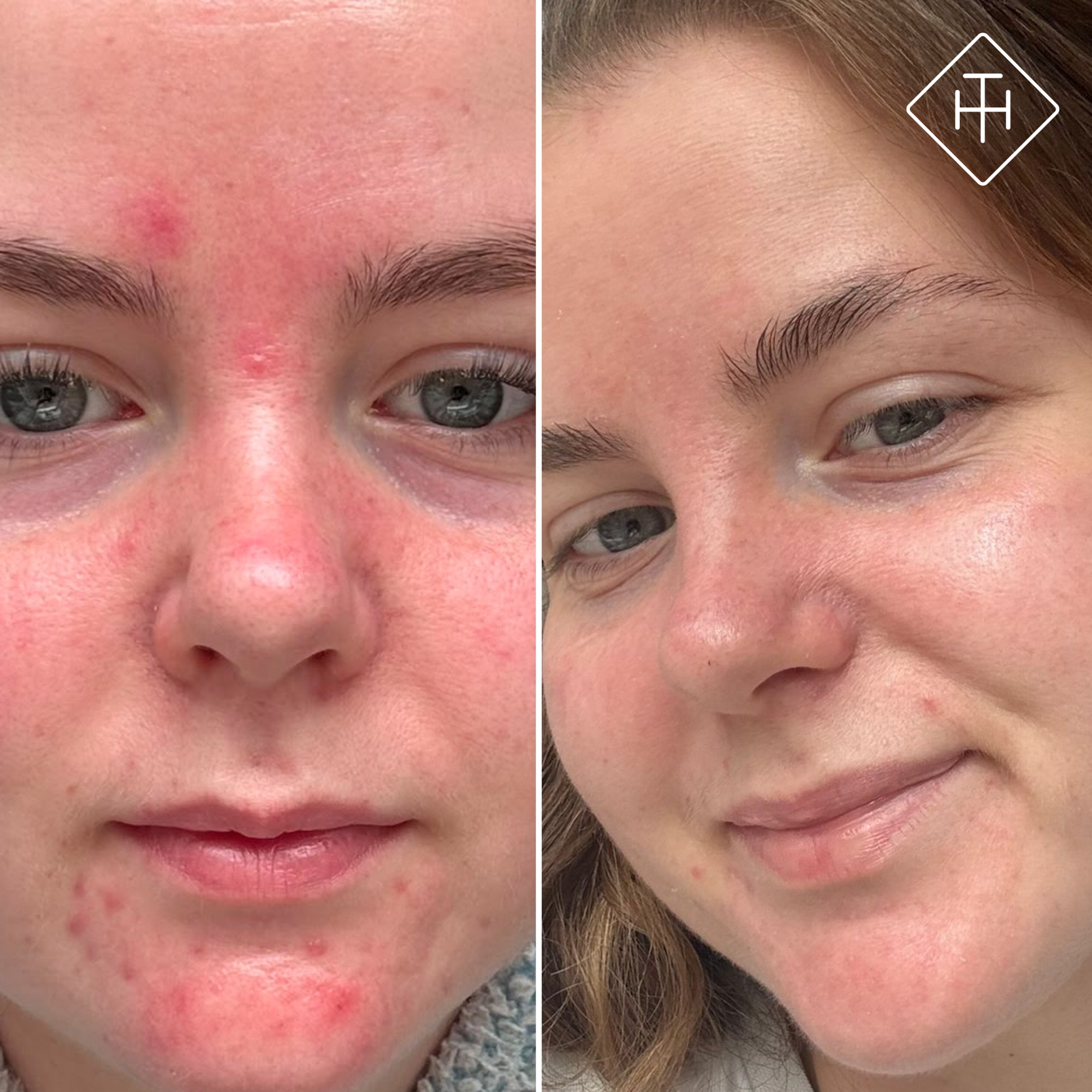
If a simple, consistent routine hasn’t made a visible difference after eight to twelve weeks, or if breakouts are becoming inflamed, cystic, or leaving marks, it’s time to get proper support rather than keep experimenting. Hormonal acne responds well to the right guidance, and catching it early matters, because inflamed acne left untreated carries a real risk of scarring.
Hormonal teenage acne isn’t something to just wait out. With the right approach, it’s genuinely treatable, and your teenager doesn’t have to spend their formative years feeling self-conscious about their skin.
If you’d like to talk through your teenager’s skin, book a consultation and we’ll put together a plan that’s built around them.